
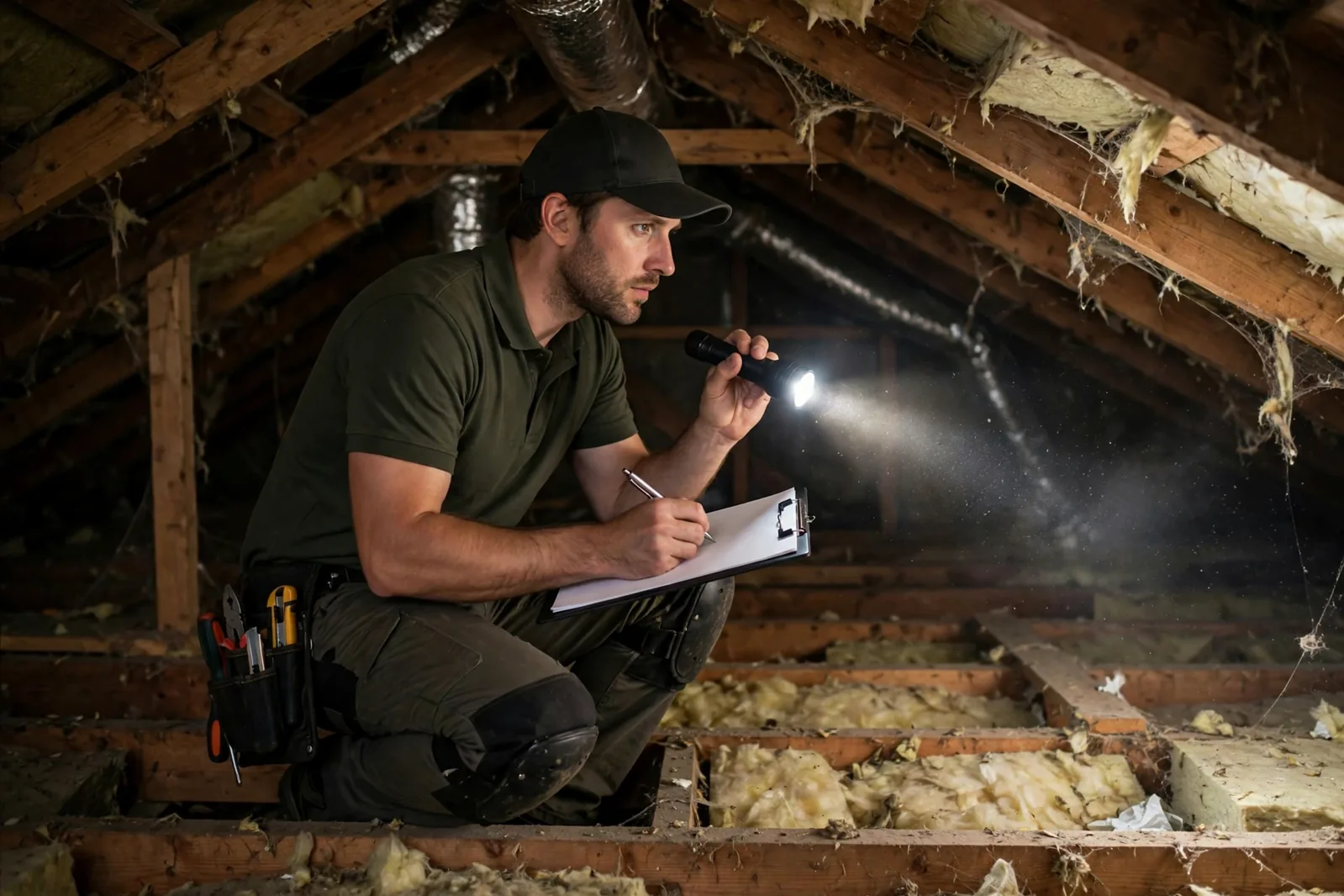
No flat price — and why
Mice control does not have a single flat price, because no two mouse problems are the same size. A home with a few mice in one kitchen needs far less work than a home with mice established in the attic and wall voids, and the cost follows the work, not a menu. This guide covers the factors that shape it, so you know what an inspection is measuring.
None of the factors below are prices. They are the things a provider weighs when scoping a plan for your property, and understanding them helps you compare plans and ask better questions.
Home size and layout
Larger homes take longer to inspect, trap, and seal, because there is more attic, more wall void, more foundation, and more roofline to cover. Layout matters too: a single-story home with an accessible attic is simpler than a multi-story home with several voids, a finished basement, and an attached garage, each of which needs its own check.
Outbuildings add scope as well. Garages, sheds, and workshops where mice nest first can be part of the plan, especially on West Bay and larger West Olympia properties where the survey covers the whole property.
How far mice have spread
Spread is the biggest cost driver after size. Mice confined to one room need a small trapping plan; mice in the attic, walls, and kitchen need a wider one, plus more cleanup. Established populations also tend to need more visits, because trapping continues until activity stops.
Signs of spread include droppings in several rooms, nightly sounds in more than one wall, and nesting material in the attic. An inspection maps spread before any plan is priced, which is why the inspection step matters so much.
Entry points and sealing scope
The number and type of entry points shape the sealing scope, and older Olympia homes usually have more of them. A newer home might need a few pipe gaps and a door sweep sealed; an older South Capitol or Eastside home might need foundation cracks, rooflines, vents, and utility penetrations addressed across the whole exterior.
Materials also vary by opening: mesh for vents, sealant for cracks, sweeps for doors, and fitted covers for larger gaps. The scope is counted in openings, not in time spent, which is another reason an on-site survey beats a phone estimate.
Cleanup and property type
Droppings cleanup and dead rodent removal add scope when they are needed. Attic droppings cleanup, in particular, can be a significant part of a job when droppings have built up for months, and it pairs with exclusion so the cleaned space stays clean.
Property type matters as well. A single-family home is one scope; a duplex or apartment building needs a building-wide plan covering shared walls and common areas; a restaurant or office needs a plan fitted to its operations. Commercial mice control plans are scoped by building, not by room.
What an inspection clarifies
An inspection turns these factors from guesses into a scoped plan: home size and layout, spread of activity, entry-point count, cleanup needs, and property type. That is why providers start there, and why a plan quoted without an inspection is usually either too broad or too narrow for the actual problem.
When you call, describe what you have seen — droppings, sounds, sightings — and where. The more specific the signs, the more accurate the inspection, and the clearer the plan that follows.
Comparing plans fairly
When comparing plans, compare scope, not just the bottom line — and since no flat prices apply here, scope is the only fair comparison. A complete plan should spell out what is inspected, what is trapped, what is sealed, what is cleaned, and whether follow-up checks are included. A plan that covers only trapping may look simpler than one that includes sealing and cleanup, but it answers a different, smaller problem.
Ask what happens if activity continues after the first visits, and what the plan does about entry points found during the work. Plans that include sealing and cleanup address the cause and the evidence; plans that stop at trapping address only the mice present on the day. The difference shows up in whether the problem returns next season.
Prevention versus repeat visits
Sealing is a one-time scope of work in a way trapping is not. Trapping removes the mice present, but without sealing, each new season can bring new mice through the same gaps, and each wave needs its own round of visits. Sealing changes that pattern: once gaps are closed, the house stops recruiting new mice, and later work — if any is needed — is smaller and focused on new gaps from settling or repairs.
That trade-off is why providers usually recommend pairing removal with sealing even when sealing adds to the initial scope. The alternative is a cycle of repeat trapping that never addresses why mice keep arriving. For older Olympia homes with many gaps, the sealing scope is larger, but it is also where the long-term value sits, because those homes face the most pressure every fall.
Reducing future scope
The most reliable way to keep future mice work small is to close the gaps and keep them closed. Sealing done well means later visits, if any are needed, deal with new gaps from settling, repairs, or storm damage rather than the original openings. Storing food in sealed containers, clearing pantry spills, and keeping garage and storage areas tidy also reduce what attracts mice in the first place.
Monitoring matters as much as the first job. Checking the attic and the spots where droppings were found, a few times a year, catches new activity while it is still small and modest in scope. A home that is sealed and watched tends to need far less work over the years than a home that is trapped repeatedly without ever closing the gaps.
Access problems that add scope
Access shapes scope more than most homeowners expect. An attic with a small, awkward hatch takes longer to inspect and clean than one with a full-sized opening, and a crawl space with low clearance limits what a provider can reach and how thoroughly it can be checked. Finished basements hide wall voids behind drywall, cluttered garages block the walls and corners where signs collect, and stored boxes in an attic bury the droppings and nesting material a survey needs to see.
None of these are faults — they are normal features of lived-in homes — but each one adds time and sometimes changes the method. Clearing attic and crawl space access points before the visit, and moving stored material away from garage walls, helps the provider see the full picture in one trip rather than two. When access cannot be improved, the plan accounts for it, and the provider will explain which areas could only be partially checked and what that means for the plan.
Follow-up visits: when they are part of the plan
Follow-up visits are part of most removal plans, and their number depends on the problem. Trapping plans need checks: traps must be inspected, captured mice removed, and placement adjusted as activity shifts. A light problem in one room may need only a short round of checks, while mice established across an attic and wall voids need a longer round, because activity fades gradually rather than stopping at once.
Sealing verification is the other common follow-up. After gaps are closed, the provider rechecks the sealed points and the rooms where activity was found, watching for fresh droppings or sounds that would mean a gap was missed or a new one opened. Seasonal rechecks serve the same purpose on a longer cycle: a home sealed in fall benefits from a spring look at the same points, since winter rain and wind can loosen vent covers and shift flashing. Plans that include these checks cost more in scope than plans that stop at the first visit, but they are also the plans that catch a returning problem while it is still small.
Related services and areas
Related services: Mice Inspection, Commercial Mice Control. Also see mice control in Downtown Olympia and mice control in Olympia, WA.